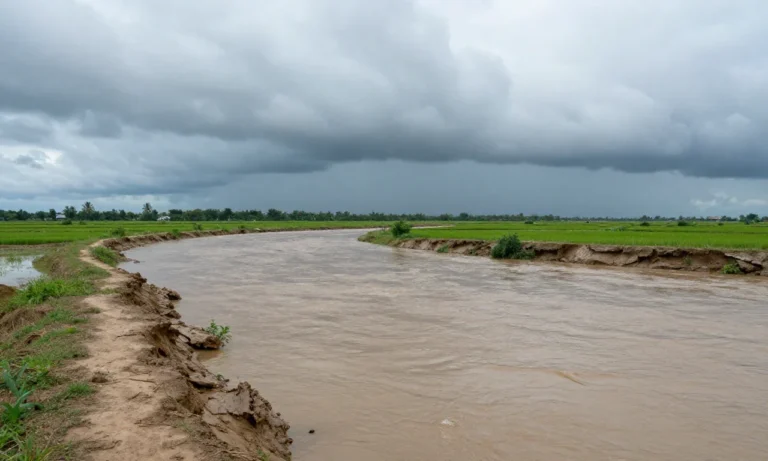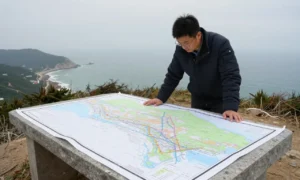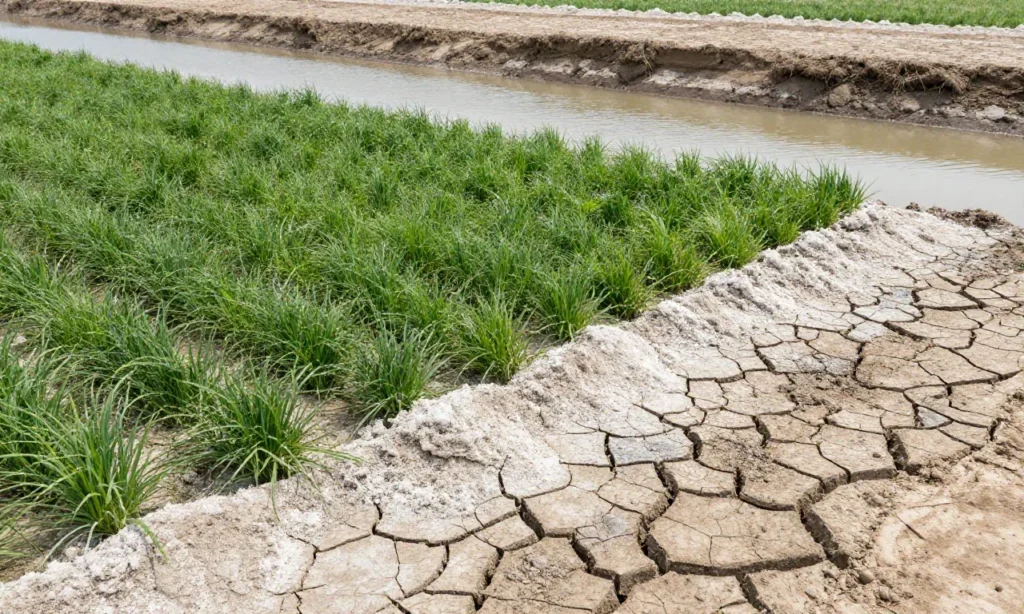
Hạn hán và xâm nhập mặn đang gây thiệt hại nghiêm trọng cho ngành nông sản xuất khẩu tại vùng Delta sông Mekong. Nguồn nước ngọt suy giảm trong mùa khô làm giảm khả năng chống chọi với nước biển, khiến độ mặn thấm sâu vào các hệ thống sông nội địa. Điều này thay đổi tính chất đất, hạn chế tưới tiêu và buộc nông dân phải điều chỉnh lịch vụ.
Các loại cây trồng phục vụ xuất khẩu trở nên dễ tổn thương hơn khi thiếu nước trùng với đỉnh điểm mặn, gây tắc nghẽn khâu thu hoạch, chế biến và vận chuyển. Sự tương tác giữa biến đổi khí hậu, quản lý nước thượng nguồn và thủy triều quyết định mức độ ảnh hưởng đến chuỗi sản xuất. Để duy trì nguồn cung ổn định cho thị trường quốc tế, cần phân bổ tài nguyên nước chính xác và áp dụng kỹ thuật canh tác thích ứng với biến động độ mặn.
Nguyên nhân sâu xa của xâm nhập mặn
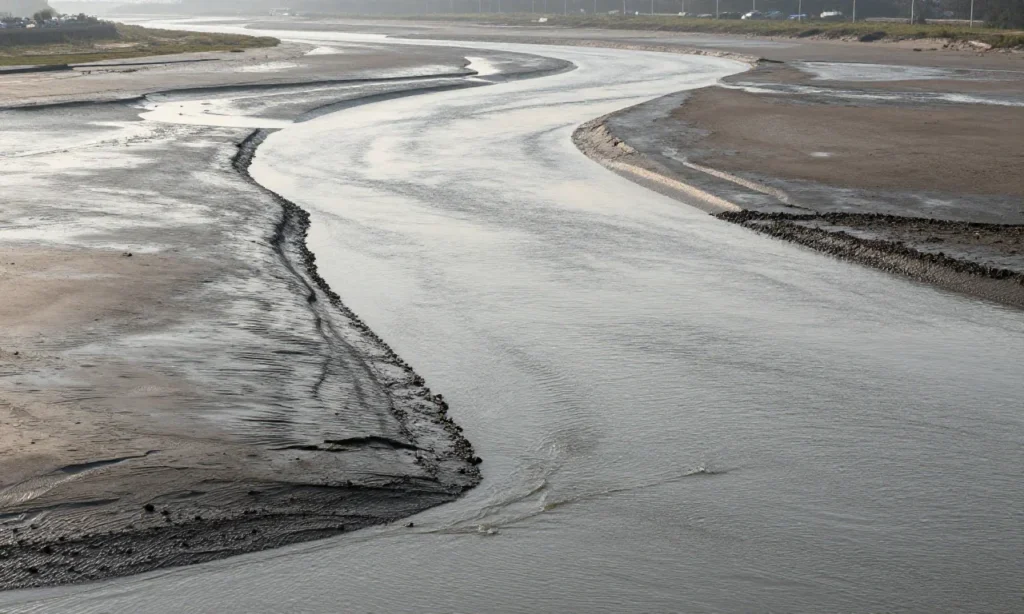
Global warming accelerates temperature rises and alters precipitation patterns, fundamentally changing the hydrological balance across the region. Sea level expansion pushes saline water further inland, while increased evaporation rates drain surface reservoirs faster than they can refill.
Groundwater extraction for domestic consumption and industrial development depletes underground aquifers, removing the subsurface pressure that normally counteracts seawater migration. Deforestation and uncontrolled land conversion degrade soil structure, reducing its capacity to retain moisture and filter contaminants.
Upstream dam operations retain seasonal floodwaters, stripping the delta of its natural freshwater replenishment. These compounding factors create a systemic deficit where salt accumulation outpaces natural flushing mechanisms.
The phenomenon operates as a predictable annual cycle, yet its intensity scales with human activity and climatic shifts. Without coordinated intervention, the baseline salinity threshold continues to rise, compressing viable agricultural zones inward.
Thực trạng hạn mặn mùa kiệt 2025
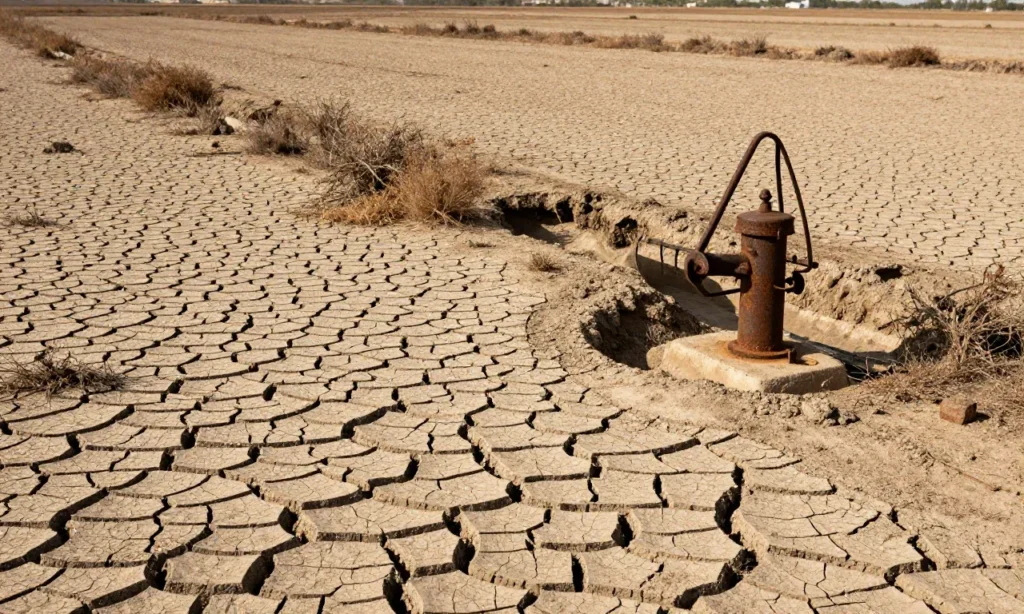
Hydrological forecasts place current water availability below average levels, with dry-season flow frequencies registering between sixty and seventy-five percent relative to historical baselines. Salinity projections indicate higher concentrations than multi-year averages, driven by sustained low flows and persistent tidal surges. Agricultural authorities have already completed winter-spring planting across multiple provinces, securing initial harvest windows in Soc Trang, Long An, Dong Thap, Can Tho, Kien Giang, Tien Giang, Ca Mau, An Giang, and Vinh Long.
However, water demand intensifies for the upcoming summer-autumn cycle, which overlaps precisely with the peak salinity window spanning February through April. Coastal districts face acute pressure as irrigation networks strain under competing domestic and agricultural needs. Upper delta regions retain adequate reserves, though mountainous zones like Tinh Bien and Tri Ton require targeted storage and efficiency measures.
Middle delta zones rely on operational control structures to capture and hold freshwater whenever conditions allow. Continuous monitoring of salinity thresholds becomes critical, especially for fruit orchards in Chau Thanh, Cho Lach, and Mo Cay districts.
Proactive allocation prevents sudden shortages during high-tide events. Regional disparities dictate response strategies. Soc Trang and Hau Giang prioritize canal dredging and temporary storage to buffer against rapid salinity spikes.
Long An and Dong Thap coordinate pump station deployments to maintain minimum flow velocities that resist seawater advance. Can Tho integrates environmental sensors along main rivers to track real-time conductivity changes.
Early warning systems alert stakeholders before thresholds breach crop tolerance limits. The convergence of low flow and high tide creates compound stress, requiring synchronized reservoir releases and localized water rationing. Proactive planning mitigates cascading failures across supply chains.
Diễn biến xâm nhập mặn sâu và sớm
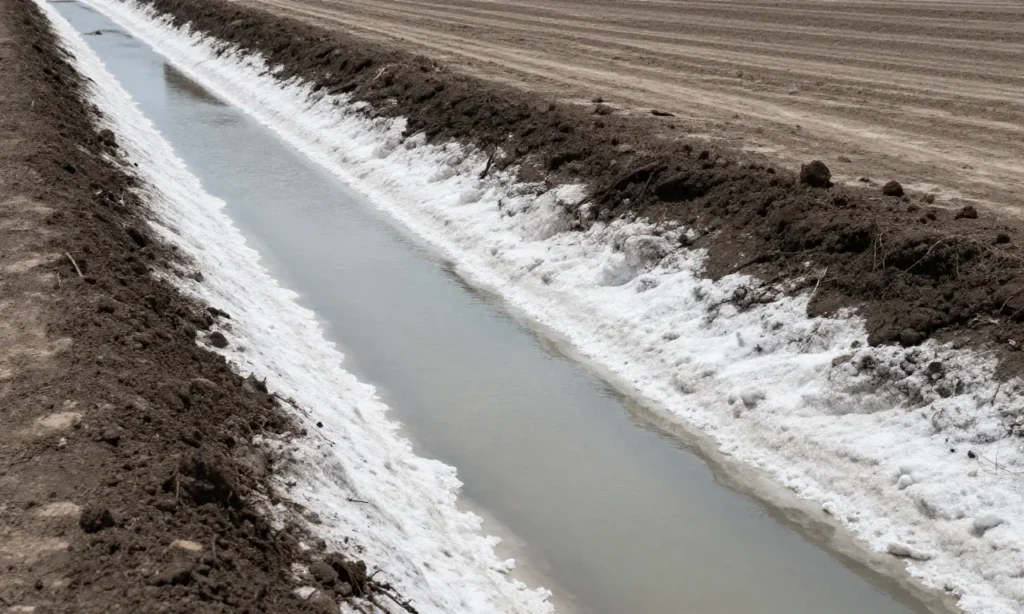
Salinity penetration reaches unprecedented depths during peak tidal periods, with the four-gram-per-liter boundary extending eighty-two to eighty-five kilometers along the Vam Co river system. Inland river mouths record boundaries between forty-five and sixty-six kilometers, while western coastal zones push forty-eight kilometers ashore.
These measurements exceed historical averages by significant margins, indicating accelerated seawater migration. The phenomenon initiates earlier in the dry season, aligning with astronomical high-tide cycles that amplify hydraulic pressure against freshwater discharge.
Tidal surges force saline water past natural river bends, bypassing traditional control points and penetrating previously stable zones. Riverbed erosion compounds the issue, deepening channels and allowing denser saltwater to flow further upstream.
The interaction between low river discharge and strong tidal currents creates a suction effect, pulling saline fronts inland even when surface flows appear adequate. Monitoring stations detect conductivity spikes well before visible water discoloration occurs, providing early indicators of subsurface migration.
The speed of penetration leaves minimal reaction time for infrastructure adjustments, requiring preemptive gate closures and reservoir sealing. Historical comparisons show current trajectories outpacing previous extreme events, signaling a structural shift in baseline salinity distribution.
Comparative analysis reveals that current intrusion patterns surpass the baseline distance by substantial margins, while exceeding previous extreme event thresholds by considerable distances. The Vam Co system experiences dual pressure from western and eastern tributaries, concentrating saline load in central distribution channels.
Mekong mouth rivers face compounded stress as multiple distributaries compete for limited freshwater volume, forcing salinity to dominate weaker flow paths. Coastal embayments act as reservoirs for concentrated brine, releasing pulses during ebb tides that flood adjacent agricultural plots.
River morphology changes, including sediment deposition and channel narrowing, restrict natural dilution capacity, allowing salt concentration to remain elevated longer. The timing of peak intrusion now coincides with critical growth stages for several export crops, amplifying yield vulnerability.
Tác động cụ thể đến nông sản xuất khẩu
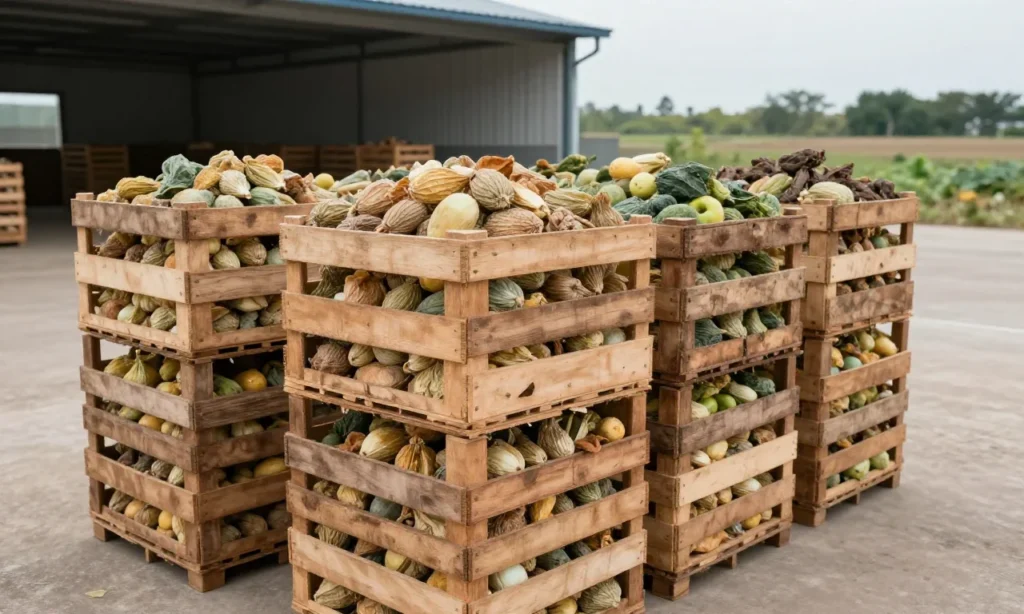
Agricultural output faces direct constraints as salinity alters soil chemistry and restricts irrigation viability. Crop roots experience osmotic stress, reducing nutrient uptake and impairing physiological functions essential for fruit development and grain filling. Soil structure deteriorates as salt crystals displace organic matter, decreasing porosity and limiting oxygen exchange.
Root systems become suffocated, leading to widespread plant decline and reduced harvestable volume. Rice cultivation suffers from stunted tillering and increased susceptibility to pest infestations under saline stress. Fruit orchards experience premature leaf drop, flower abortion, and uneven ripening, compromising both yield quantity and market grade.
Aquaculture zones face stock mortality as brine concentration exceeds tolerance thresholds, disrupting breeding cycles and increasing disease prevalence. Processing facilities encounter water quality issues, requiring additional filtration to meet export sanitation standards. Supply chain continuity falters as inconsistent harvest schedules delay shipments and breach contractual delivery windows.
International buyers impose stricter quality certifications, rejecting batches that fail salinity residue tests. Economic losses accumulate across production tiers, from field-level yield reductions to downstream processing inefficiencies. The cumulative impact compresses profit margins and forces strategic crop substitution in vulnerable zones.
Field-level assessments indicate that prolonged exposure beyond acceptable thresholds triggers irreversible cellular damage, particularly in sensitive varieties cultivated for premium markets. Long-term soil salinization reduces arable land productivity, forcing farmers to abandon traditional cropping patterns in favor of tolerant species.
Irrigation infrastructure corrosion accelerates equipment failure rates, increasing maintenance costs and downtime. Pump systems operate less efficiently when drawing from brackish sources, consuming more energy per unit of usable water. Processing plants face higher operational expenses as desalination membranes require frequent replacement and chemical cleaning.
Export documentation demands rigorous testing for heavy metal and salt residue compliance, adding administrative overhead and delaying customs clearance. Market volatility increases as supply fluctuations trigger price adjustments, affecting long-term buyer relationships. Smallholder producers bear disproportionate risk due to limited capital reserves, making recovery from consecutive poor seasons difficult.
Cooperative models attempt to pool resources for shared water storage and filtration, but scalability remains constrained by geographic dispersion. The sector adapts through phased transition strategies, gradually shifting high-value export crops to protected cultivation systems where salinity can be actively managed.
Giải pháp ứng phó và công trình kiểm soát
Infrastructure development addresses salinity intrusion through engineered control systems designed to block and redirect seawater. The Rach Mop sluice project, funded at nine hundred billion dong, establishes a critical barrier along the southern bank of the Hau River. This facility integrates multiple auxiliary gates to regulate flow velocity and prevent reverse saline movement.
The system protects approximately nineteen thousand hectares of agricultural land across multiple districts while supporting thirty-six thousand seven hundred hectares of broader irrigation networks. Complementary structures manage tidal surges, maintaining freshwater pressure against incoming brine. The Cai Lon-Cai Be complex operates on a larger scale, safeguarding nearly three hundred eighty thousand hectares across four provinces.
Canal dredging restores storage capacity, enabling seasonal water retention for dry-season release. Pump stations distribute captured freshwater strategically, prioritizing high-value orchard zones and municipal supply points. Operational protocols synchronize gate openings with tidal cycles, maximizing freshwater capture during low-tide intervals. International technical assistance provides sensor technology and predictive modeling tools, improving real-time salinity tracking.
Early planting schedules reduce exposure to peak salinity periods, aligning crop growth stages with favorable hydrological conditions. Decentralized water management empowers local authorities to adjust allocation rules based on live environmental data.
Reservoir optimization involves strategic filling during wet-season surpluses, creating buffer stocks that sustain irrigation during dry months. Water conservation practices emphasize drip irrigation and soil moisture retention techniques, reducing overall withdrawal volumes.
Emergency response teams deploy mobile filtration units to treat brackish sources for drinking and limited agricultural use. Crop rotation schedules incorporate salt-tolerant varieties during high-risk periods, maintaining some harvest output despite adverse conditions.
Community-based monitoring networks report salinity levels from neighborhood canals, feeding data into regional forecasting models. Infrastructure maintenance prioritizes corrosion-resistant materials and automated control systems that respond instantly to threshold breaches.
Financial support mechanisms help farmers transition to adaptive practices, covering costs for new irrigation equipment and salt-resistant seeds. Cross-provincial coordination ensures balanced water distribution, preventing upstream hoarding that exacerbates downstream shortages. The integration of hard engineering with soft management strategies creates a layered defense system capable of withstanding varying salinity intensities.
Technical upgrades include smart sensors that automatically adjust gate positions based on real-time conductivity readings, eliminating manual lag. Energy-efficient pump designs reduce operational costs while maintaining high flow rates during critical distribution windows.
Structural reinforcements protect foundations from erosion caused by alternating fresh and saline water exposure. Maintenance schedules align with dry-season lows, allowing thorough inspections without disrupting active irrigation cycles.
Training programs equip operators with advanced hydrological modeling skills, improving predictive accuracy and response timing. Public awareness campaigns educate farmers on water-saving techniques and salinity monitoring protocols, fostering community-level participation in resource protection. The combination of engineered barriers, optimized storage, and adaptive management creates a resilient framework that minimizes production disruption during extreme salinity events.
Định hướng phát triển bền vững
Long-term resilience requires structural transformations that decouple agricultural output from volatile salinity patterns. Planning focuses on constructing large-scale river gate complexes at key confluences, including Vam Co, Co Chien, Hau, and Ham Luong. These installations provide permanent control over freshwater-saltwater interfaces, enabling precise flow regulation regardless of external tidal conditions.
Thirteen dedicated water storage projects prioritize coastal districts, ensuring reliable supply for both irrigation and municipal consumption. Rural water infrastructure expands treated freshwater networks to remote villages, reducing dependence on localized brackish sources.
Agricultural models shift toward integrated systems combining crop cultivation, aquaculture, and renewable energy generation, diversifying income streams. Export certification frameworks adopt stricter environmental standards, requiring documented water management plans and continuous salinity monitoring.
International partnerships facilitate technology transfer, funding research into salt-tolerant cultivars and advanced filtration methods. Policy reforms streamline permitting processes for adaptive infrastructure, accelerating deployment. The transition demands coordinated investment, technical capacity building, and sustained commitment to resource stewardship.
Market mechanisms evolve to reward sustainable practices, with premium pricing attached to certified low-impact products. Supply chain transparency improves through digital tracking, verifying water sourcing compliance.
Financial instruments develop insurance products tailored to climate-related crop failures. Research institutions collaborate with private partners to commercialize drought-resistant seed varieties. Regulatory frameworks mandate environmental assessments for all new infrastructure.
Community engagement programs foster ownership of water management initiatives. The pathway forward requires balancing immediate production needs with structural investments that secure future viability. Adaptation represents a fundamental reorientation of agricultural practice toward climate-resilient systems.